
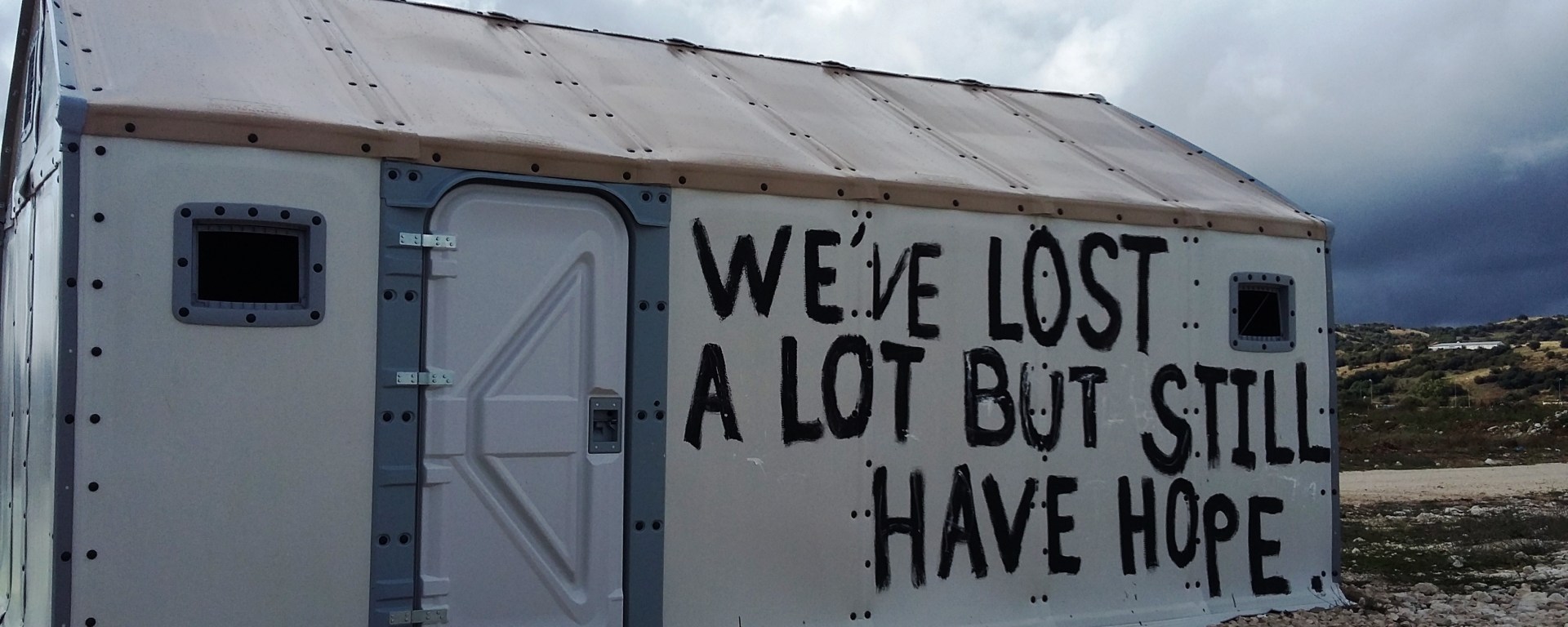
If a person is not healthy enough to make sense of the past and accept reality, regain control of their future and finally enjoy life, this person is very likely to drift to the social periphery, develop feelings of worthlessness, resentment and despair, perceive the environment as hostile and eventually respond in the same manner.
The mental health situation in the asylum seekers’ camps in Greece is ‘dire’, as described in Greece in 2016: Vulnerable People Get Left Behind, a report, released by Doctors without borders on the 21st October 2016.
Doctors without Borders, (Médecins Sans Frontières, MSF) has been providing care to asylum seekers and migrants in Greece since 1996. In 2015 more than a million people entered the country in their attempt to reach Northern Europe. That caused MSF to expand its activities and currently, the organisation is active in more than 20 different locations across the country providing mental health care, sexual and reproductive health care and care for patients suffering from chronic diseases.
I have reached out to Dr Kalina Yordanova, MSF’s Mental Health Activities Manager in Athens, to discuss the hardship which people on the move are faced with and its long-term impact on both them and the host societies.
 Kalina Yordanova, PhD, MSF’s Mental Health Activities Manager in Athens, is a psychoanalytically trained psychotherapist and researcher. She holds a PhD in Psychoanalysis and Anthropology from University College London. Kalina Yordanova has worked for Assistance Centre for Torture Survivors in Sofia and since 2016 she has joined Doctors without Borders (MSF). She has been invited to give talks and has written publications on the topics of the socialist labour camps in Bulgaria and the transmission of war experience across generations. Kalina Yordanova, PhD, MSF’s Mental Health Activities Manager in Athens, is a psychoanalytically trained psychotherapist and researcher. She holds a PhD in Psychoanalysis and Anthropology from University College London. Kalina Yordanova has worked for Assistance Centre for Torture Survivors in Sofia and since 2016 she has joined Doctors without Borders (MSF). She has been invited to give talks and has written publications on the topics of the socialist labour camps in Bulgaria and the transmission of war experience across generations. |
Could you, please, with a couple of sentences, explain what is going on with the psyche of an asylum seeker and what are the main mental health issues that they are facing?
Although difficult to describe the condition of an asylum seeker in a couple of sentences, I can single out several important points.
We need to understand that there is no universal answer about the situation of the asylum seekers and this is why each case should be looked at individually. This is so because each patient possesses a different capacity to deal with psychological trauma, depending on their previous experience with violence and loss, the length of the exposure to violence, the capacity of the environment to provide support, etc. In this line of thought, what is going on with the psyche of an asylum seeker can be best described by the concept of the après coup* which indicates the traumatic effect of the past triggered by present-day circumstances and always in relation to the individual history of the particular patient. When an asylum seeker is faced with slow asylum procedures with an unclear outcome, unsanitary living conditions, lack of orientation in the host country, and various types of abuse during the journey and the stay in camps or squats, his or her traumatic past can hit back.
Everything from the environment that reminds the asylum seeker of his or her history of loss, separation, violence and helplessness may surface again in the form of a psychological symptom: psychosomatic complaints, anxiety, sadness, difficulty in parenting, suicidal thoughts.
These are indeed the most frequent findings of our team.
 What is the long-term impact of unresolved mental health issues for the refugees? In addition to this question, how is poor mental health impacting the capacity to integrate into a new society and why is taking care of mental health an essential part of relief and integration efforts?
The result of unresolved mental health issues is their complication. Needless to say, one of the terms we use to describe unresolved grief is complicated grief which convincingly illustrates the fact that unresolved issues pile up, block the patients’ daily functioning and complicate their life. In practical terms, this means that mental health issues that are not dealt with can affect the quality of family life, may be the cause of severe mental illness (depression, psychosis, acute stress-related conditions) and can prevent people from their further integration into the host community. This last point is essential in order to understand that mental health services are crucial for the refugees’ integration into a new environment.
If a person is not healthy enough to make sense of the past and accept reality, regain control of their future and finally enjoy life, this person is very likely to drift to the social periphery, develop feelings of worthlessness, resentment and despair, perceive the environment as hostile and eventually respond in the same manner.
The report enlists six major external factors detrimental to psychological well-being: the destruction of the family entity; uncertainty about the future; a feeling of insecurity; isolation and discrimination; living conditions in the camps; lack of legal information and assistance. Could you please explain how these factors are harmful to the psyche?
” (…) due to the circumstances gender roles change in too short a time frame: in a short period of time they have to adapt to a situation that requires the negotiation of a new power relationship inside the family and the couple. Normally such a change requires a dozen of years or more; the families are not prepared for this and are often dragged into a conflict due to new balances of power and responsibilities which are difficult to manage. MSF psychologists are also consulted for these problems, which are not easy to deal with when people are facing so much pressure. These stressors are often unbearable for those people who are already dealing with traumatic and depressive symptoms.”
Greece in 2016: Vulnerable People Get Left Behind |
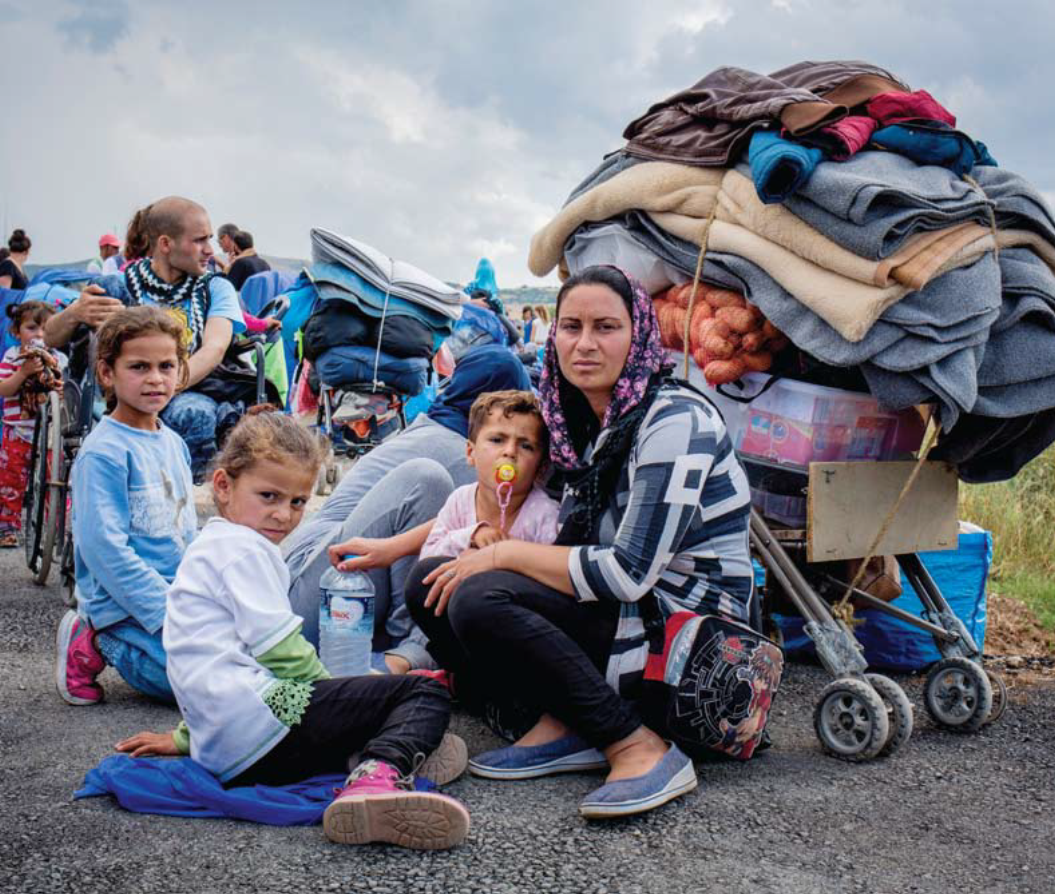
Let me give you an example: a 40-year-old Syrian woman living in a squatted hotel in central Athens came to our services in the MSF-run clinic in Victoria in order to seek psychological support as a parent. The woman came to Greece some 7 months ago with her teenage daughter and her 5-year-old son after the family separated in Turkey and her husband left for Sweden. Uprooted from her domestic environment, the woman has to deal with issues she had never dealt with before: asylum-related legal matters, education and discipline of her children without the support of the extended family, a language barrier, the hardships of everyday life with no privacy in a communal residence. What this woman is faced with is enormous anxiety and confusion related to the length and the outcome of the asylum process she cannot grasp in full, the feeling of losing control of her children who are growing up without a father and her guilt for not being a good-enough parent.
How is the refugee life shaping the psyche of the children and what long term damaging effects can that potentially have?
Children are particularly vulnerable in times of crisis for 3 main reasons.
First, since children lack the cognitive and emotional maturity to grasp extreme violence and many come from active war zones, they may remain shell-shocked by their experience for quite some time if there is no trusted adult who can help them understand and work through the horror they have witnessed.
Second, children are very receptive to everything related to their parents and construct all their responses in reference to the parents. This means that children react to the minutest problems in their family. So, in families where the traumatic past of the parents has made them irritable, withdrawn or violent, children develop learning difficulties, get sick or become delinquent in order to get attention, keep the family together or channel their own anxieties outside the family.
The last reason for children’s vulnerability is their age. The early years are critical for structuring our personality and developing our identity.
The time spent in camps with no structured activities, adequate support or certainty about the future brings about identity issues, risky behaviour and difficulty to setting goals and boundaries.
|
“I feel like we are being treated like animals, I know people in Europe treat their pets better than the way we are treated here. My children are always sick due to the conditions; I am so worried for them. I would rather go back to Syria and have a quick death but in dignity rather than to die slowly in humiliation here in this camp’. A 41-year-old man from Syria, living in Kalochori camp with his wife and his 3 children, in Greece for almost six months.” Greece in 2016: Vulnerable People Get Left Behind |
Albeit limited, what kind of help is available on-site?
MSF provides psychotherapy in individual and group format. We work in confidential settings with our own trained interpreters. In the first place, a therapeutic session is a space that is meant to create meaning on the basis of trust. This means that for approximately one hour on a regular basis, in a specially designed room and for a preliminary negotiated period, patient and therapist meet. The goal is to help the patient understand their condition and become aware of their responsibility for their own life. The therapeutic response – group or individual, exploring the past or more related to the present – should be tailored according to the needs and capacities of each patient but always keeping in mind that refugees are temporarily in the camps and we should not plan in-depth interventions if we do not have the time to finish the work we started.
What are the main issues the MSF psychologists face on a daily basis that which prevent them from practising their work?
There are two types of challenges MSF psychologists are faced with.
The first one comes very much from the specific temporary situation of our patients. In his study of super-modernity, French anthropologist Marc Augé argues the existence of non-places such as airports and highways that do not imply any common reference to a group, do not create a sense of belonging, make people feel anonymous and lonely, and – for all these reasons – become abandoned. Refugee camps are non-places: they are inhabited forcibly and temporarily; they are not the true home of anyone and they are easily abandoned. This characteristic of the places where we work often prevents us from completing the therapy with our patients who can disappear any moment. Such a dynamic re-enacts the loss and separation our beneficiaries have been through, with the risk of having no time to work through this problem.
The second challenge we face is related to the high demand for specialised care and the absence of organisations that have the true capacity to provide it. This creates a confusion of tongues between the announced and the real mandate of those working in the field.
 Kalina, why did you choose to join MSF? There are a lot of opportunities for working in the humanitarian sector. Which one we embark on, is a matter of informed choice. Coming from a former socialist country where people were persecuted for their opinion, I grew up knowing to appreciate independence and freedom. MSF is the only humanitarian organisation which does not receive money from UN bodies, governments or the EU but is funded exclusively by private donors. This financial independence allows us to speak out without having any conflicts of loyalty and perform our job independently of corporate and political interest. Yet, there is an important point I would like to make. Many people choose the humanitarian sector because they stand up for equal human rights or because they like helping others. Although I deeply respect both discourses, I share a third perspective. As a psychologist, I take a sympathetic but neutral stand while accompanying my patients through a process of personal growth. This means that I consider our beneficiaries equal in rights and responsibilities as well as having the potential to help themselves. I believe that this is the only way to restore the self-confidence of war survivors and integrate them in the host society. Have you felt a negative attitude towards you because of your work? Personally, I have never experienced a negative attitude because of my work. This may be exactly because of what I mentioned above: in order to provide professional services to our beneficiaries, I try not to identify with their grievances or act on their behalf, but enable my patients to resume agency and take responsibility for their choices. How does your work with the asylum seekers affect your non-professional side? I have been working with asylum seekers for eight years and I have learnt a lot from my work. My work has taught me to appreciate the small pleasures of everyday life and has given me insight into cultures I could not have known otherwise. Most importantly, it helped me better understand the intimate connection between my family’s history of participation in four wars (the Frist and Second Balkan War, WWI and WWII) and my interest in psychological trauma. Along with my supervision and personal analysis, my work with my patients has been the major resource for self-reflection. Have you drawn any conclusions about the human psyche while working with people faced with such extreme conditions? I do not dare say that I have drawn conclusions because I am in a very dynamic relationship with my working field and it constantly adds to what I have learnt. Yet, my work with refugees and my doctoral research on the intergenerational transmission of war experience in Bosnia and Herzegovina have shaped several hypotheses. First, I have noticed that extreme violence cannot be easily represented mentally and works towards psychological fragmentation. This means that extreme violence can shatter the personality of the victim and can affect subsequent generations. Second, contemporary warfare significantly differs from previous wars. Contemporary war is about internalisation of violence (quick exchange of combatants across borders and global cash flows), precision and vast operational scope of weaponry, replacement of ideology with sheer corporate interests in wars by proxy and battlefields controlled by numerous actors. All this creates the sense of total devastation of territory, body, historical legacy, identity and cultural memory. Ultimately, this means that in contrast to the victims of previous wars who could envision their symbolic survival in the survival of their children and their culture, the present-day citizens of Aleppo or Mosul are faced with the terror of their total erasure and no hope. Such experience, particularly if protracted, can be very damaging individually as well as transgenerationally. |
* Also Afterwardsness (English) or Nachträglichkeit (German) which refers to Freudian psychoanalytical “mode of belated understanding or retroactive attribution of traumatic meaning to earlier events.” As summarised by another scholar, ‘In one sense, Freud’s theory of deferred action can be simply stated: memory is reprinted, so to speak, in accordance with later experience’.
For more photos see also:
 Ирина Атанасова | Irina Atanasova